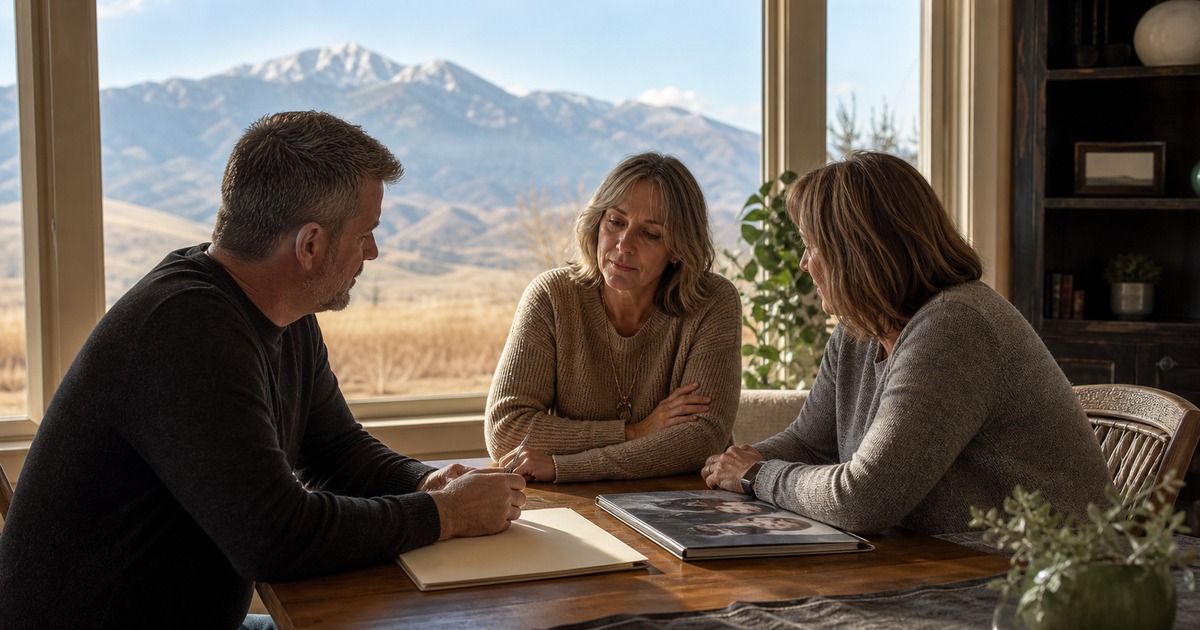
A pre-planning conversation is easier when it begins with care rather than urgency. Choose a quiet time, explain that you want to reduce uncertainty, share a few broad preferences, and invite questions. The goal is understanding, not forcing everyone to make every decision in one sitting.
For guidance from a local funeral director, call Didericksen Memorial 24/7 at (435) 277-0050. Jay R. Didericksen serves families from 87 W Main St in Grantsville and throughout Tooele County.
Choose a calm moment
Avoid beginning during a crisis, holiday gathering, or family conflict. A private conversation with the people most likely to help carry out the plan creates more room for honest questions.
Explain why you want to plan
A simple opening can lower tension: 'I want you to know what matters to me so you do not have to wonder later.' Keep the focus on clarity, care, and family communication.
Start with broad preferences
Discuss burial or cremation, the kind of gathering you value, faith or cultural traditions, important contacts, and where documents are kept. Detailed music or readings can be added later.
Listen to family concerns
Some relatives may feel relieved, while others may feel uncomfortable or worried. Let them respond without treating hesitation as refusal. Clarify that the conversation can continue over time.
Write down the decisions
A short written summary prevents different memories of the same conversation. Date the notes, identify the primary family contact, and review the plan after major life changes.
A practical sequence to follow
When the family is ready, use this visible sequence as a simple guide:
- Choose a calm moment
- Explain why you want to plan
- Start with broad preferences
- Listen to family concerns
- Write down the decisions
What families should keep in mind
Some people want to make nearly every decision, while others prefer to choose only broad values. Either approach can work. State which preferences are firm and which details may be adapted by loved ones. That distinction gives guidance without taking away every opportunity for family participation.
Keeping decisions manageable
Pre-planning can begin with broad preferences rather than a complete ceremony. Recording whether you prefer burial or cremation, the kind of gathering you value, important contacts, and the location of documents gives your family a useful starting point.
Related guidance from Didericksen Memorial
The primary service resource for this topic is Didericksen Memorial. Related articles include:
Local support in Grantsville and Tooele County
Didericksen Memorial serves families in Grantsville, Tooele, Stansbury Park, Erda, Lake Point, Stockton, Rush Valley, Vernon, and nearby Utah communities. Local knowledge can help coordinate relatives, churches, cemeteries, care facilities, military contacts, and guests traveling across the county.
To ask a question or begin planning, call Didericksen Memorial 24/7 at (435) 277-0050 or visit the contact and location page.
Questions to bring to a conversation
A conversation about talking to family about funeral pre-planning does not need to cover everything at once. Write down the questions that matter most to your family, identify which facts are confirmed, and note any traditions or relationships that may affect the plan. Useful questions based on this topic include:
- How should we approach choose a calm moment in our family's situation?
- How should we approach explain why you want to plan in our family's situation?
- How should we approach start with broad preferences in our family's situation?
- How should we approach listen to family concerns in our family's situation?
- How should we approach write down the decisions in our family's situation?
Preparing before you call
A written plan should be understandable to the people who may use it. Include names, locations, and practical details, but leave room for loved ones to make personal choices if that matters to you. Reviewing the plan after major life changes keeps it useful.
The goal is not to arrive with a finished answer to how to talk with your family about funeral pre-planning. It is to give Jay R. Didericksen enough context to explain the options, identify the next required step, and help the family separate immediate responsibilities from decisions that can wait. That kind of preparation protects clarity without adding pressure.
Applying this guidance to your family
No article can account for every family relationship, faith tradition, travel concern, or timing question. Use the guidance on choose a calm moment and explain why you want to plan as a starting point, then identify where your circumstances differ. Write down those differences before the arrangement conversation. Specific questions help the funeral director give specific answers, while broad assumptions can leave relatives expecting different things.
What to confirm before details are shared
Before relatives, guests, or community members are given information about talking to family about funeral pre-planning, confirm the names, dates, locations, authorizations, and responsible contact. Mark tentative details as tentative. If a service element depends on a cemetery, hospital, military branch, clergy member, or another organization, wait for confirmation before publishing it in an obituary or sending it through family messages.
A final local planning check
Consider how the plan will work for people traveling between Grantsville, Tooele, Stansbury Park, Erda, Lake Point, and other parts of Tooele County. Confirm addresses, drive time, accessibility, weather concerns, and who will communicate changes. Then return to the central question in how to talk with your family about funeral pre-planning: choose the approach that is accurate, manageable, and most consistent with the person and family being served.
Frequently Asked Questions
How do I start a funeral pre-planning conversation?
Choose a calm time and explain that you want to make your wishes clearer and reduce uncertainty for the family.
Do we need to decide everything at once?
No. Begin with broad preferences and important contacts, then add details over time.
What if my family does not want to talk about it?
Acknowledge that the topic is difficult, keep the first conversation brief, and offer to continue when they are ready.
Should the plan be written down?
Yes. A dated written summary helps family members understand the same preferences and know where important information is located.
A final note for families
The most useful answer to how to talk with your family about funeral pre-planning is one that fits the actual family rather than an imagined perfect plan. Review the guidance on start with broad preferences, identify any decision that still depends on another person or organization, and keep one written list of confirmed details. Didericksen Memorial can help families in Grantsville and throughout Tooele County understand what must happen next, what choices remain open, and how to communicate the plan clearly without making a difficult period feel more complicated.